
PSI Technologies, Inc.

TDM

AM3440Reliable TDM Solutions for Legacy, Utility, and Critical Infrastructure Networks

Overview of Time Division Multiplexing (TDM) Time Division Multiplexing (TDM) is a digital communication method that allows multiple signals to share the same communication channel by allocating specific time slots for each signal. This technique is essential for efficient data transmission in various networking environments.

Key Features of TDM

  • Time Slots: Each signal is assigned a specific time slot in a repeating cycle, ensuring that multiple data streams can coexist on the same channel without interference.
  • Digital Form: TDM operates with digital signals, making it suitable for modern telecommunications.
  • Increased Efficiency: By utilizing available bandwidth effectively, TDM optimizes the use of the communication medium.

TDM Standards

TDM encompasses several standards and protocols that define how data is transmitted over various connections. The most notable are DS1/E1, DS3/E3, and SONET.

DS1 (T1) and E1

  • DS1 (T1):
    • Bandwidth: Carries 1.544 Mbps.
    • Structure: Divided into 24 channels, with each channel capable of carrying 64 Kbps of data.
    • Application: Commonly used in North America for voice and data communication.
  • E1:
    • Bandwidth: Offers 2.048 Mbps.
    • Structure: Comprises 32 channels, each with a capacity of 64 Kbps, with overhead for synchronization.
    • Application: Widely used in Europe and other parts of the world for similar purposes as DS1.

DS3 (T3) and E3

  • DS3 (T3):
    • Bandwidth: Supports 44.736 Mbps.
    • Structure: Contains 672 channels, allowing multiple DS1 signals to be multiplexed together.
    • Application: Suitable for high-capacity telecommunications, often used by ISPs and in private networks.
  • E3:
    • Bandwidth: Provides 34.368 Mbps.
    • Structure: Composed of 16 E1 channels.
    • Application: Utilized in European telecommunications for high-capacity data transmission.

SONET (Synchronous Optical Networking)

  • Structure: SONET is a standardized protocol that defines how multiple digital data streams are multiplexed over optical fiber.
  • Bandwidth: The base level (STS-1) offers 51.84 Mbps, with higher levels (STS-3, STS-12, etc.) supporting up to several Gbps.
  • Flexibility: Supports a variety of payloads, including telephone calls and data traffic, with a focus on synchronization and reliability.
  • Applications: Key in long-haul telecommunications, connecting various networks, and providing a backbone for digital services.

Comparison of TDM Standards

Feature DS1/E1 DS3/E3 SONET
Bandwidth 1.544/2.048 Mbps 44.736/34.368 Mbps 51.84 Mbps (base)
Structure 24/32 channels 672/16 channels Synchronous frame
Application Areas Voice, data High-capacity telecom Long-haul networks
Regions of Use North America / Europe North America / Europe Global

Conclusion
Time Division Multiplexing plays a crucial role in organizing and optimizing digital communication by enabling multiple signals to use the same communication channel efficiently. Standards like DS1/E1, DS3/E3, and SONET provide structured methods for data transmission, catering to varying needs in telecommunications across different regions and applications. The evolution of TDM has contributed significantly to the development of modern telecommunication infrastructures.

PSI TDM Solutions
Our TDM products, including T1 and OC3, provide a robust and reliable foundation for your network needs. These solutions are designed to support traditional Time Division Multiplexing (TDM) services while offering a seamless migration path to modern packet transport technologies. By transitioning to packet transport, you can enhance your network’s scalability, efficiency, and flexibility, ensuring it meets the demands of today’s digital landscape. This migration path not only supports high-speed data, voice, and video services but also reduces operational costs and complexity. Embrace the future with our TDM products that pave the way for innovative advancements like 5G and beyond, ensuring your network remains competitive and future-proof.

Even as networks evolve toward packet‑based architectures, many organizations still rely on Time Division Multiplexing (TDM) for mission‑critical services. We help utilities, transportation agencies, government entities, and enterprises maintain, modernize, and extend their TDM infrastructure with dependable equipment, expert guidance, and long‑term support. Our solutions cover T1, DS3, OC‑3, and other traditional transport technologies, ensuring your legacy services remain stable while providing a smooth path toward packet migration.

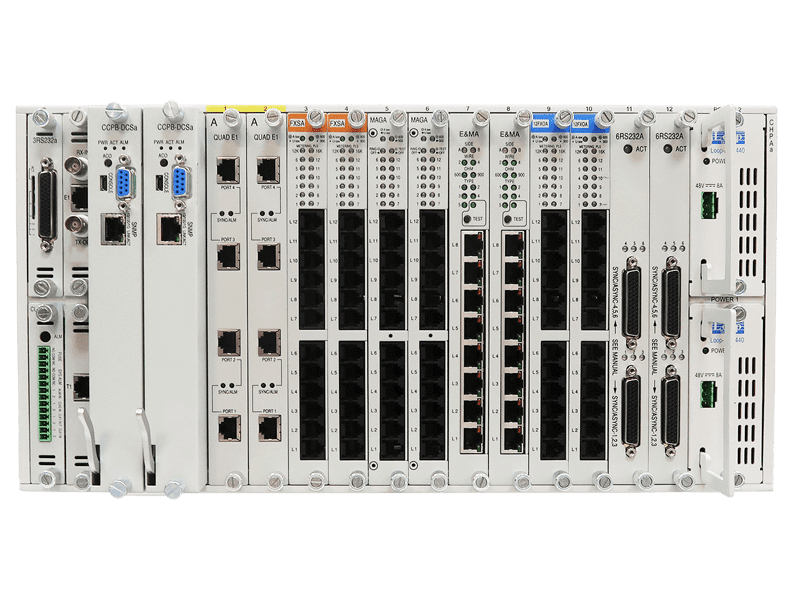
As a long‑standing VAR with deep experience in TDM, we continue to support the now‑discontinued DZS IMACS platform, and we offer a full portfolio of Loop Telecom solutions — including TDM multiplexers, access devices, and hybrid platforms that support both legacy and modern packet protocols. Whether you need replacement units, expansion modules, or a modernized TDM/IP architecture, we deliver the equipment and expertise to keep your network running reliably.

What We Deliver

  • T1, DS3, and OC‑3 TDM Solutions for legacy and mission‑critical applications
  • Hybrid TDM + Packet Platforms to support MPLS, Ethernet, and IP services
  • Replacement, Expansion & Support for discontinued DZS IMACS systems
  • Loop Telecom Multiplexers & Access Devices for flexible TDM and packet deployments
  • Design & Engineering Services for modernization and lifecycle planning
  • 24×7 Technical Support to keep essential services online

Featured TDM Technology Partners
DZS IMACS – Continued Support for a Proven Legacy Platform

Although the DZS IMACS product line has been discontinued, many organizations still depend on it for essential TDM and access services. We continue to support IMACS deployments with available hardware, modules, and technical expertise to help extend the life of your existing infrastructure.
Benefits:
Protects existing investments, ensures continuity of service, provides a stable platform for gradual migration to packet‑based networks.
Loop Telecom – Bridging TDM and Modern Packet Networks
Loop Telecom offers one of the industry’s most versatile portfolios for operators who need to maintain legacy TDM services while introducing modern packet technologies. Their platforms support traditional TDM multiplexing alongside Ethernet, IP, and MPLS, enabling a smooth transition from older infrastructure to next‑generation networks. This hybrid approach allows operators to preserve mission‑critical TDM circuits while deploying packet‑based services on the same platform.
Benefits:
Highly reliable TDM solutions, integrated support for MPLS and modern packet protocols, broad product range, strong interoperability, and long lifecycle support for networks evolving from legacy to IP.

Why TDM Still Matters

  • Mission‑critical reliability: TDM remains the gold standard for deterministic, low‑latency transport.
  • Long‑term stability: Many utility and industrial systems depend on TDM for decades‑long operational cycles.
  • Smooth migration: Hybrid TDM/IP platforms like Loop Telecom’s make it easier to evolve without disrupting service.

Please contact PSI at 201.488.6000 for a quote

All logos, brand, product, service, and process names are trademarks or service marks of their respective holders and are protected by U.S. and international copyright laws and treaty provisions. All trademarks and registered trademarks are the sole property of their respective holders. All photographs are courtesy of respective manufacturers. All specifications, products, product names, schedules, content and prices are subject to change without notice. No warranty is made as to technical accuracy. No warranty is made with respect to the merchantability of any product, service or solution or the fitness of any product, service or solution for any particular purpose or use. Nothing contained herein shall be construed as conferring any license or right under any copyright, trademark, patent or other intellectual property rights. 251208-1842